 EN
 Deutsch
 Español
 Français
 Italiano
 Português
 Nederlands
 Polski
 Bahasa Indonesia
 Русский
 Українська
 العربية
 עברית
 हिन्दी
 日本語
 한국어
2026-02-27
High-Performance Azure Cloud Governance to Reduce Waste


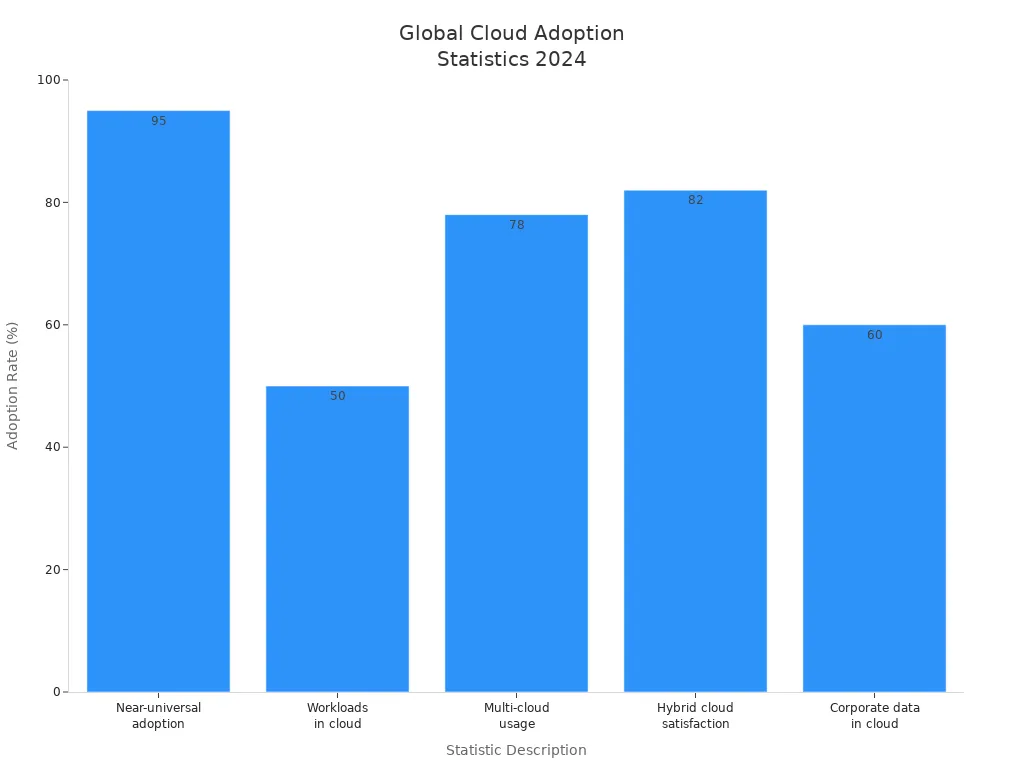
High-performance cloud computing plays a vital role in today's digital landscape. You can leverage its capabilities to manage large workloads and deliver reliable services. As organizations increasingly adopt cloud solutions, understanding how to design these systems becomes essential. Statistics show that over 94-96% of companies now use cloud services, with about 50% of their workloads running in public clouds. This shift highlights the necessity for effective engineering in cloud environments to maximize efficiency and reduce costs.
Key Takeaways
- Understand scalability to manage increased workloads effectively. Implement autoscaling to adjust resources based on demand.
- Prioritize reliability by establishing service-level agreements (SLAs) with cloud providers. This builds customer trust and prevents revenue losses.
- Maximize efficiency by adopting robust governance strategies. Monitor cloud spending to prevent waste and ensure financial efficiency.
- Leverage cloud architectures that support flexibility and resilience. This ensures your systems can adapt to changing business needs.
- Utilize virtualization to enhance resource allocation and simplify workload management. This leads to better performance in cloud environments.
- Adopt containerization for modular application deployment. This approach allows for quick scaling and improved performance.
- Implement continuous integration practices to automate software development. This leads to faster deployments and reduced risks.
- Use monitoring tools to track key performance indicators (KPIs). This helps maintain system health and optimize resource usage.
Principles of High-Performance Cloud
High-performance cloud systems rely on several core principles that ensure they meet the demands of modern businesses. Understanding these principles helps you design and manage cloud environments effectively.
Scalability
Scalability is the ability of a system to grow and manage increased loads by adding resources. This principle is crucial for maintaining performance during peak usage times. Here are some key points about scalability:
- Scalability allows applications to handle increased loads without performance degradation.
- It supports business continuity during rapid growth or peak periods.
- Effective scalability leads to improved user experiences and optimized costs.
To achieve scalability, consider implementing strategies such as autoscaling, which adjusts resources based on real-time demand. This approach can reduce costs significantly while ensuring that performance remains stable during high traffic periods. Additionally, using techniques like database sharding and elastic load balancers can enhance your system's ability to distribute workloads efficiently.
| Principle | Description |
|---|---|
| Scalability | The ability of a system to enhance its capacity as the load increases by adding more resources. |
| Reliability | Ensures the system delivers required functionality and continues to operate despite component failures. |
| Performance | Aims to minimize time taken and maximize data transfer quantities. |
| Security | Protects data and applications from unauthorized access and threats. |
| Cost Efficiency | Focuses on economical usage of cloud resources to achieve operational efficiency. |
Reliability
Reliability is another essential principle of high-performance cloud systems. It ensures that your cloud environment consistently delivers the required functionality. Here are some insights into reliability:
- Cloud providers establish service-level agreements (SLAs) that guarantee specific performance and uptime metrics.
- Reliability engineering is crucial for maintaining high availability and performance in cloud services.
- A focus on reliability builds customer trust and satisfaction while preventing revenue losses.
Recent industry reports show that leading cloud providers, such as Amazon Web Services and Microsoft Azure, maintain high reliability metrics. They achieve this through proactive measures and extensive performance data. For instance, CoreWeave achieved the ClusterMAX™ Platinum tier, indicating top-tier reliability and performance.
Efficiency
Efficiency in cloud computing is about maximizing resource usage while minimizing waste. Governance plays a vital role in achieving this efficiency. Here are some practices that enhance cloud efficiency:
- Implement robust Identity and Access Management (IAM) to control access to cloud resources.
- Prioritize security and compliance by adopting proactive measures such as encryption and regular assessments.
- Continuously monitor and optimize governance strategies to ensure they align with business needs.
Continuous governance ensures that cloud resources are utilized securely and cost-effectively. This structured approach allows you to adapt quickly to changing needs while maintaining security and compliance. Effective governance involves tracking cloud spending and setting budgets, which helps prevent waste and ensures financial efficiency.
By focusing on scalability, reliability, and efficiency, you can engineer high-performance cloud systems that meet the demands of your organization.
High-Performance Cloud Technologies
High-performance cloud technologies form the backbone of modern cloud computing. They enable organizations to optimize their operations and enhance performance. Understanding these technologies is essential for leveraging the full potential of cloud environments.
Cloud Architectures
Cloud architectures define how various components of cloud systems interact. A well-designed architecture supports high-performance workloads and ensures efficient resource utilization. For instance, in market risk analysis, orchestration software manages numerous compute nodes to run simulations. This setup allows for parallel processing, significantly enhancing computational efficiency.
Key elements of effective cloud architectures include:
- Scalability: The ability to grow resources as demand increases.
- Flexibility: Adapting to changing business needs without significant downtime.
- Resilience: Ensuring systems remain operational even during failures.
Virtualization
Virtualization plays a crucial role in enhancing performance in cloud systems. It enables multiple virtual instances to operate on a single physical server. This maximizes resource utilization and allows for efficient management of applications and workloads. By abstracting the physical infrastructure, virtualization facilitates scalable and flexible cloud environments.
Benefits of virtualization include:
- Improved resource allocation.
- Enhanced isolation of applications.
- Simplified management of workloads.
Containerization
Containerization has transformed how applications are deployed and managed in cloud environments. It allows you to package applications and their dependencies into containers. This modular approach simplifies scaling since services operate independently.
Here are some performance benefits of containerization:
| Performance Benefit | Description |
|---|---|
| Scalability | Containerization allows for quick scaling of resources to meet changing business demands. |
| Flexibility | It provides flexibility across cloud environments, enabling seamless application deployment. |
| Improved Performance | Continuous monitoring and predictive auto-scaling enhance performance and reliability. |
| Load Balancing | Distributes traffic to prevent bottlenecks, ensuring consistent application performance. |
| Fault Tolerance | Increases fault tolerance, reducing the impact of potential failures on user experience. |
High-performance computing (HPC) integrates seamlessly into cloud environments, enhancing computational power. HPC enables businesses to process large datasets and perform complex simulations. This capability leads to significant advancements in efficiency and productivity across various sectors, including finance, healthcare, and manufacturing.
By leveraging cloud-native microservices, you can further improve performance. Microservices architecture allows applications to be divided into smaller, independent services. This modular approach facilitates quicker development, testing, and deployment. As a result, you can adapt to new requirements or technologies more efficiently.
Performance Metrics for Cloud Systems
Measuring the performance of cloud systems is crucial for ensuring they meet your organization's needs. You can achieve this by focusing on key performance indicators (KPIs) and utilizing effective monitoring tools.
Key Performance Indicators
Key performance indicators help you assess the efficiency and effectiveness of your cloud systems. Here are some of the most commonly used KPIs:
- Response time: This metric measures the total time it takes for a system to respond to a user request. A lower response time indicates better performance.
- Throughput: This refers to the number of transactions or requests the system can handle in a given time period. Higher throughput means your system can manage more users simultaneously.
- Error rate: This percentage indicates how many requests result in errors. A lower error rate signifies greater system stability.
- Resource utilization: This includes metrics like CPU usage, memory consumption, disk I/O, and network bandwidth. Monitoring these helps you optimize resource allocation.
- Elasticity: This measures how well the system scales in response to changing loads. Effective elasticity ensures that your system can handle fluctuations in demand.
- User experience: Metrics such as page load times and user satisfaction scores provide insights into how users perceive your system's performance.
- Cost-related metrics: Understanding the cost per transaction or cost per user helps you manage expenses effectively.
By tracking these KPIs, you can gain valuable insights into your cloud system's performance and make informed decisions to enhance its efficiency.
Monitoring Tools
Monitoring tools play a vital role in maintaining high performance in cloud systems. They help you detect issues before they escalate, ensuring the reliability and availability of your services. Here are some key contributions of monitoring tools:
- They allow you to track KPIs that indicate system health and performance.
- Monitoring tools provide insights into performance indicators such as throughput, latency, memory usage, and response time.
- They enable proactive management by identifying patterns and anomalies in real-time data.
- Automated responses to events, like scaling resources during traffic spikes, enhance system performance.
Additionally, monitoring tools measure uptime and downtime, indicating service availability. They also assess response time, showing how quickly your system reacts to requests. Resource utilization metrics help you evaluate the efficiency of your resource usage.
By implementing a proactive performance engineering framework with effective monitoring tools, you can ensure that your high-performance systems operate smoothly and efficiently. This approach allows you to maintain optimal performance while minimizing costs and maximizing user satisfaction.
Best Practices for Cloud Optimization

Optimizing your cloud environment is essential for achieving high performance. Implementing best practices can significantly enhance your system's efficiency and reliability. Here are some strategies to consider:
Load Balancing
Load balancing is crucial for distributing workloads evenly across multiple instances. This practice prevents any single instance from becoming a bottleneck. Here are some effective load balancing strategies:
- Distribute workloads across multiple instances to optimize load average.
- Employ auto-scaling to adjust resources automatically based on demand.
- Optimize application code for better efficiency.
- Regularly monitor performance metrics to adjust resource allocation and maintain optimal load balancing.
By implementing these strategies, you can ensure that your cloud environment remains responsive and efficient, even during peak usage times.
Caching Strategies
Caching can significantly improve the performance of your cloud applications. By storing frequently accessed data in a cache, you reduce the time it takes to retrieve information. Here are some effective caching strategies:
- Use in-memory caching solutions like Redis or Memcached to speed up data retrieval.
- Implement content delivery networks (CDNs) to cache static assets closer to users, reducing latency.
- Regularly review and update your cache policies to ensure they align with current application needs.
These strategies help you minimize response times and enhance user experience, making your cloud applications more efficient.
Continuous Integration
Continuous integration (CI) enhances the performance and reliability of your cloud systems. It automates the software development process, allowing for faster and more reliable deployments. Here’s how CI can benefit your cloud environment:
| Key Aspect | Description |
|---|---|
| CI/CD Pipelines for Faster Deployments | Automates the build, test, and release process, leading to quicker software updates with reduced risk. Companies using CI/CD see a 70% reduction in deployment failures. |
| Automated Testing | Prevents regression issues, ensuring new updates do not disrupt existing functionality, especially in decentralized teams. |
| Regular Maintenance and Updates | Keeps systems secure and up to date with patches and vulnerability fixes, ensuring system trustworthiness. |
By adopting continuous integration practices, you can streamline your development process and maintain high performance in your cloud systems.
High-Performance Cloud Governance
High-performance cloud governance is essential for managing cloud environments effectively. A governance-first methodology aligns your cloud management practices with business outcomes. This approach reduces friction in processes and ensures that your cloud resources are utilized efficiently.
Governance Strategies
Implementing robust governance strategies is crucial for maintaining control over your cloud environment. Here are some core strategies to consider:
| Governance Strategy | Description |
|---|---|
| Cloud Governance Framework | Establishes policies and guidelines for controlled cloud service consumption aligned with business objectives. |
| Cloud Service Catalog | A list of approved services that standardizes consumption and mitigates risks. |
| Cloud Service Management | Manages the lifecycle of cloud services, defining roles and responsibilities. |
| Cloud Security | Implements security controls to ensure compliance and protect against vulnerabilities. |
| Cloud Cost Management | Monitors and optimizes spending to prevent unexpected costs. |
| Cloud Compliance | Ensures adherence to laws and industry standards through regular assessments. |
| Cloud Risk Management | Identifies risks and implements mitigation strategies aligned with business objectives. |
These strategies help you maintain a structured governance approach, which is vital for achieving high performance in cloud environments. Without effective structural governance, you risk uncontrolled resource sprawl and unexpectedly high cloud bills. This can degrade efficiency and lead to financial strain.
Financial Oversight
Financial oversight plays a significant role in the efficiency and sustainability of high-performance cloud systems. By establishing robust cost management controls, you ensure effective utilization of cloud resources. This reduces waste and helps you avoid unnecessary expenses. Here are some key practices to consider:
| Cost Management Practice | Impact on Efficiency and Sustainability |
|---|---|
| Establishing robust cost management controls | Ensures effective utilization of cloud resources, reducing waste and costs. |
| Monitoring continuous development environments | Prevents unnecessary expenses from unused testing infrastructure. |
| Managing backup and replication of data | Eliminates costs associated with retaining obsolete data. |
| Avoiding oversupplied resources | Reduces excess provisioning, leading to optimized resource use. |
| Controlling egress or bandwidth charges | Prevents unexpected high charges, maintaining budget efficiency. |
Additionally, traditional budgeting processes can lead to overprovisioning, negating cloud savings. Identifying and eliminating wasteful consumption is crucial for maximizing cloud benefits. Focusing on optimizing margins rather than merely reducing costs supports sustainable growth.
Policy Enforcement
Effective policy enforcement mechanisms are vital for maintaining governance in cloud computing. Here are some essential components to consider:
| Component | Description |
|---|---|
| Policies and Standards | Establishes rules for resource usage, access, and security measures, ensuring consistency and reducing risks. |
| Security and Risk Management | Implements access controls and regular audits to protect data and infrastructure, identifying threats and mitigation strategies. |
| Compliance and Regulatory Adherence | Aligns cloud usage with industry standards and legal requirements, using tools for monitoring compliance and addressing violations. |
| Cost Management and Optimization | Involves tracking spending and optimizing costs through budget settings and resource management rules to ensure financial efficiency. |
| Monitoring and Automation | Uses tools for continuous monitoring of resource usage and security events, automating policy enforcement to reduce manual oversight. |
| Roles and Responsibilities | Clearly defines accountability for managing resources and responding to incidents, ensuring governance is a shared effort across departments. |
By implementing these components, you create a framework that supports effective governance. This framework enables you to maintain control over your cloud resources while ensuring compliance and security.
Case Studies in High-Performance Cloud
Company A: Achieving Scalability
Company A faced challenges with fluctuating workloads. To overcome these issues, they focused on enhancing their cloud infrastructure's scalability. They implemented several key strategies that contributed to their success:
- Resource Management: Efficiently managing resources allowed Company A to adapt to varying demands. They monitored usage patterns and adjusted resources accordingly.
- Cost Optimization: Establishing a budget and cost goals helped minimize expenses while maximizing ROI. This approach ensured that they could scale without overspending.
- Cloud Services Utilization: Leveraging specific cloud services, such as auto-scaling and serverless computing, enhanced their ability to scale resources dynamically. This flexibility allowed them to respond quickly to changes in demand.
By adopting these strategies, Company A successfully scaled its operations. They improved performance during peak times and maintained a seamless user experience. This case illustrates how effective resource management and cloud services can drive scalability in high-performance cloud environments.
Company B: Enhancing Reliability
Company B prioritized reliability in their cloud systems to ensure consistent service delivery. They recognized that downtime could lead to significant revenue losses and customer dissatisfaction. To enhance reliability, they implemented several best practices:
- Redundancy: Company B established redundant systems to ensure that if one component failed, another could take over. This approach minimized downtime and maintained service availability.
- Regular Testing: They conducted regular testing of their systems to identify potential weaknesses. This proactive measure allowed them to address issues before they affected users.
- Monitoring Tools: Utilizing advanced monitoring tools enabled Company B to track performance metrics in real-time. They could quickly identify and resolve issues, ensuring high availability.
These practices helped Company B achieve impressive reliability metrics. Their commitment to maintaining operational performance built customer trust and satisfaction. This case highlights the importance of proactive measures in enhancing reliability within high-performance cloud systems.
In summary, you must prioritize engineering high-performance cloud systems to meet your organization's needs. Focus on scalability, reliability, and efficiency to enhance your cloud performance. Implementing strong governance practices will help you manage resources effectively and reduce costs. As you explore these principles, consider how they can transform your cloud environment into a powerful asset. Embrace these strategies to unlock the full potential of your cloud solutions.
FAQ
What is high-performance cloud computing?
High-performance cloud computing refers to cloud services designed to handle large workloads efficiently. It enables organizations to run complex applications and process vast amounts of data quickly.
How does high performance computing benefit businesses?
High performance computing allows businesses to analyze large datasets, run simulations, and improve decision-making. It enhances productivity and reduces time-to-market for new products.
What are the key components of high-performance cloud architecture?
Key components include scalability, reliability, and efficiency. These elements ensure that your cloud environment can handle varying workloads while maintaining performance and minimizing costs.
How can I optimize my cloud resources?
You can optimize resources by implementing load balancing, caching strategies, and continuous integration practices. These methods help you manage workloads effectively and reduce waste.
What role does governance play in cloud efficiency?
Governance ensures that your cloud resources are used effectively and securely. It helps prevent resource sprawl, reduces costs, and aligns cloud usage with business objectives.
How can I measure the performance of my cloud systems?
You can measure performance using key performance indicators (KPIs) such as response time, throughput, and error rate. Monitoring tools also provide insights into system health and resource utilization.
What are some common challenges in high-performance cloud environments?
Common challenges include managing costs, ensuring security, and maintaining compliance. Organizations must also address resource sprawl and optimize performance to achieve desired outcomes.
How can I ensure my cloud environment remains reliable?
To ensure reliability, implement redundancy, conduct regular testing, and utilize monitoring tools. These practices help you identify issues early and maintain high availability.
🎧 Listen to this episode
Want a practical explanation of High-Performance Azure Cloud Governance to Reduce Waste? This episode breaks down the topic in clear language and shows why it matters for Microsoft 365, Azure, Power Platform, security, AI, and modern work.
Listen to this episode if you want to:
- Understand the key concepts behind High-Performance Azure Cloud Governance to Reduce Waste
- See how it fits into the wider Microsoft technology ecosystem
- Learn where it can create practical value for your organization
You may also enjoy these related M365 FM episodes:
- Build an Automated Azure Cleanup Engine to Reduce Cloud Waste
- Cloud Governance as Architecture, Not Feature Management
- Architect a High-Performance Autonomous Enterprise with Microsoft 365
- High-Performance Automation Control Plane for Power Automate
- Fix Azure Governance Before Your Next Cloud Audit
Discover more practical Microsoft conversations on M365 FM.
Apple Podcasts · Spotify · YouTube · YouTube Music
Host: Mirko Peters